




The Ultimate Guide to Oticon Hearing Aids in Indiranagar (2025): Everything You Must Know Before You Buy
You can hear the words clearly. You follow conversations. You get through your day.
But by evening, you are exhausted — not from what you did, but from the sheer effort of *listening*. You come home from a meeting, a family dinner, or a busy afternoon in Indiranagar's commercial lanes, and your brain feels wrung out in a way that is difficult to explain to people who hear effortlessly.
If you wear hearing aids and recognise this experience, there is a clinical term for what you are feeling: listening fatigue. And — here is what most hearing aid providers will never tell you — your hearing aid may be contributing to it.
Conventional hearing aids are designed around a simple principle: identify the primary speaker, amplify that voice, and suppress everything else. On paper, this sounds logical. In neurological reality, it forces your brain to fight against its own natural processing architecture — working harder, not smarter, to reconstruct a complete picture of your acoustic environment from an artificially reduced signal.
Oticon, founded in Denmark in 1904 and one of the oldest hearing aid companies on earth, spent over a decade of neuroscience research arriving at a different conclusion. The result is their BrainHearing™ philosophy — and the hearing aid platforms built around it — which have fundamentally changed what premium hearing technology can do for the people who depend on it.
This guide is your complete, expert-level framework for making an informed decision about Oticon hearing aids in Indiranagar. Whether you are comparing Oticon hearing aid prices in Bangalore, searching for an authorised Oticon hearing aids clinic in Indiranagar, or evaluating Oticon for the very first time, every critical piece of knowledge you need is in this guide.
The Crucial Questions: What to Ask Before Buying an Oticon Hearing Aid?
An Oticon hearing aid — particularly a flagship Intent or Real platform device — is a precision medical investment built on two decades of neuroscience research. The clinical process surrounding that investment is as decisive as the device itself. These are the questions every informed buyer must be prepared to ask.
How to Verify an Oticon Hearing Aid Provider's Credentials and Expertise
Before visiting any Oticon hearing aids centre in Indiranagar, conduct this systematic verification:
- RCI-Registered Audiologist: The professional fitting your Oticon device must hold a BASLP or M.Sc. in Audiology & Speech-Language Pathology and be registered with the Rehabilitation Council of India (RCI). In India, dispensing hearing aids without this qualification is a regulatory violation and a clinical risk to your hearing health. Verify credentials before booking any fitting session.
- Oticon Authorised Partner Status: Oticon India operates through a certified authorised partner network. Only authorised partners receive genuine Oticon stock, official product training, direct manufacturer support, and access to warranty-backed services. Ask every prospective clinic directly: *"Are you an authorised Oticon hearing aid dealer in Bangalore?"* A legitimate authorised centre will confirm this immediately and can produce documentation on request.
- Proficiency with Genie 2 Fitting Software: Oticon hearing aids are programmed using Oticon Genie 2 — the brand's proprietary fitting platform. Confirm that the audiologist is trained and actively working on the current Genie 2 version, including the OpenSound Navigator and BrainHearing personalisation features specific to the Intent and Real platforms. A provider using a generic third-party programming tool to configure an Oticon device is delivering a clinically compromised fitting.
- Familiarity with BrainHearing Philosophy: A genuinely qualified Oticon provider should be able to explain — in accessible, patient-facing language — what BrainHearing means, why OpenSound Navigator works differently from conventional directional processing, and how this distinction is clinically relevant to listening fatigue. If the person fitting your Oticon device cannot articulate this core brand philosophy, their expertise with Oticon's clinical framework is questionable.
- Trial Period Policy: A minimum 15–30 day real-world trial period is the clinical and ethical standard for any hearing aid prescription. For Oticon's OpenSound platform in particular — whose open-processing approach can initially feel different to patients accustomed to conventional directional aids — a structured real-world trial period is especially important for allowing adaptation and accurate outcome assessment.
- Diagnostic Infrastructure on Premises: A professional Oticon hearing aids clinic in Indiranagar must have a calibrated soundproof audiometry booth, a clinical audiometer, and — critically — Real Ear Measurement (REM) equipment. These are non-negotiable baseline tools for delivering a prescription-grade hearing aid fitting. Their absence is a reliable indicator of a clinic operating below clinical standards.
The Top 5 Red Flags: How to Spot an Unreliable Oticon Hearing Aid Provider in Indiranagar
The hearing aid retail market in Bangalore includes providers across a wide spectrum of clinical competence and ethical accountability. These five warning signs will help you identify and avoid the unreliable end of that spectrum:
Red Flag 1 — Unable to Explain BrainHearing or OpenSound Navigator:
Oticon's clinical differentiation is rooted in neuroscience — specifically in how the brain processes the full acoustic environment as opposed to a directionally filtered one. A provider who cannot explain what BrainHearing means, how OpenSound Navigator differs from conventional directional microphone processing, or why this distinction matters clinically, has not received adequate Oticon product training. Selling Oticon devices without understanding Oticon's science is a significant red flag for fitting quality.
Red Flag 2 — Recommending a Device Before Your Audiogram Is Complete:
An Oticon Intent recommended before your audiologist has completed a full diagnostic audiological evaluation — including PTA, speech audiometry, and UCL testing — is not a clinical recommendation. It is a sales preference. Your Oticon prescription must be grounded in your specific audiometric data. Any sequence that inverts this — product first, audiogram second — should disqualify the provider from further consideration.
Red Flag 3 — No Real Ear Measurement in the Fitting Protocol:
Real Ear Measurement (REM) is the evidence-based gold standard for hearing aid fitting verification — for every brand, at every price tier. For Oticon's premium devices in particular, whose OpenSound processing delivers a fundamentally different acoustic experience from conventional aids, REM is the only objective method for confirming that the prescribed amplification is correctly delivered at your eardrum. A provider who does not routinely conduct REM is not meeting the standard of care that a premium Oticon investment demands.
Red Flag 4 — No Discussion of Listening Fatigue as a Clinical Outcome Metric:
If you are evaluating Oticon specifically because of listening fatigue with existing hearing aids — and your prospective provider makes no reference to listening fatigue as a measured clinical outcome, shows no familiarity with the neuroscience behind it, and does not explain how BrainHearing addresses it — that provider is treating your purchase as a device transaction rather than a clinical intervention. Listening fatigue reduction is one of the most clinically validated advantages of Oticon's open-processing approach. A provider who does not know this is not qualified to advise you on Oticon.
Red Flag 5 — Pricing That Is Significantly Below the Authorised Market Range:
Oticon's premium platform devices command a price that reflects their research investment, engineering quality, and clinical outcomes data. Prices dramatically below the authorised market reference range (see pricing table below) are a reliable indicator of grey-market devices, refurbished stock, or product obtained outside Oticon India's authorised supply chain. Such devices carry no valid manufacturer warranty, cannot be firmware-updated through Oticon's official channels, and may not be configured for Indian audiological standards.
Budget Breakdown: Understanding the True Cost of Oticon Hearing Aids in Bangalore
Oticon hearing aid prices in Bangalore span a wide range across the brand's product portfolio, reflecting genuinely different levels of neuroscientific research investment, processing power, and clinical outcome differentiation. Understanding this range — and what each tier actually delivers — is essential before any financial commitment.
Oticon Hearing Aid Pricing Reference — Bangalore Market (Per Device, INR, 2024–2025):
| Oticon Series / Platform | Technology Level | Approx. Price Per Unit (INR) | Best Suited For |
|---|---|---|---|
| Oticon Siya / Ruby | Entry-Level Essential | ₹20,000 – ₹42,000 | Mild to moderate loss; first-time buyers; quieter listening environments |
| Oticon More 3 / Real 3 | Advanced | ₹48,000 – ₹78,000 | Active adults; basic BrainHearing processing; Bluetooth streaming |
| Oticon Real 1 / More 1 | Premium | ₹85,000 – ₹1,30,000 | Complex acoustic environments; full OpenSound Navigator; DNN processing |
| Oticon Intent (Standard) | Latest-Gen Premium | ₹1,00,000 – ₹1,45,000 | 4D Sensor motion intelligence; most natural sound quality; Intent-based processing |
| Oticon Intent (Premium) | Latest-Gen Premium Plus | ₹1,25,000 – ₹1,75,000 | Maximum BrainHearing capability; lowest listening fatigue; widest dynamic range |
| Oticon Own (Custom ITE) | Premium Custom | ₹80,000 – ₹1,35,000 | Discreet fit; custom ear canal shell; IIC invisible option; in-ear microphone advantage |
| Oticon Xceed (Power BTE) | Specialised — Profound Loss | ₹95,000 – ₹1,55,000 | Severe to profound hearing loss; maximum output with BrainHearing processing |
| Oticon CROS / BiCROS | Specialised | ₹1,00,000 – ₹1,70,000+ | Single-sided deafness; asymmetric hearing loss |
Additional costs to factor into your total investment:
- Full diagnostic audiological evaluation: ₹500 – ₹1,500
- Audiologist consultation per session: ₹500 – ₹2,000
- Annual professional device servicing and cleaning: ₹3,000 – ₹8,000 per device
- Consumables (domes, wax guards, receivers, tubing): ₹500 – ₹2,000 per year
- Extended warranty / Oticon Protection Plan: ₹5,000 – ₹12,000 per device per year
The Definitive Guide to Choosing and Getting Fitted for Oticon Hearing Aids in Indiranagar
Understanding the full clinical journey from initial audiological assessment to confident, naturally hearing daily life is the most powerful preparation you can bring to any Oticon hearing aids shop or clinic in Indiranagar. This section breaks down every critical stage in expert detail.
Step 1: The Comprehensive Audiological Assessment — The Foundation of BrainHearing
Oticon's BrainHearing philosophy holds that a hearing aid must support the brain's natural sound processing — not override it. That support can only be correctly calibrated when the underlying audiological assessment is thorough, precise, and contextually rich. A professional hearing aids clinic in Indiranagar delivering Oticon fittings must conduct the following assessment components without abbreviation:
- Comprehensive Case History: Your audiologist builds a complete clinical and lifestyle portrait. This includes the onset and progression of your hearing loss, occupational and recreational noise exposure history, tinnitus presence and character, any history of ear disease or surgery, family hearing history, and — particularly relevant for Oticon — a detailed assessment of where and how listening fatigue manifests in your daily life. Do you feel cognitively drained after meetings? Exhausted after social gatherings? Fatigued by long phone conversations? This information directly shapes the OpenSound Navigator settings, the number and character of listening programmes, and the gain strategy in your final Oticon prescription.
- Otoscopic Examination: A visual inspection of the ear canal and eardrum using a calibrated otoscope. Identifies physical conditions — earwax impaction, perforations, foreign bodies — requiring ENT clearance before hearing aid fitting proceeds.
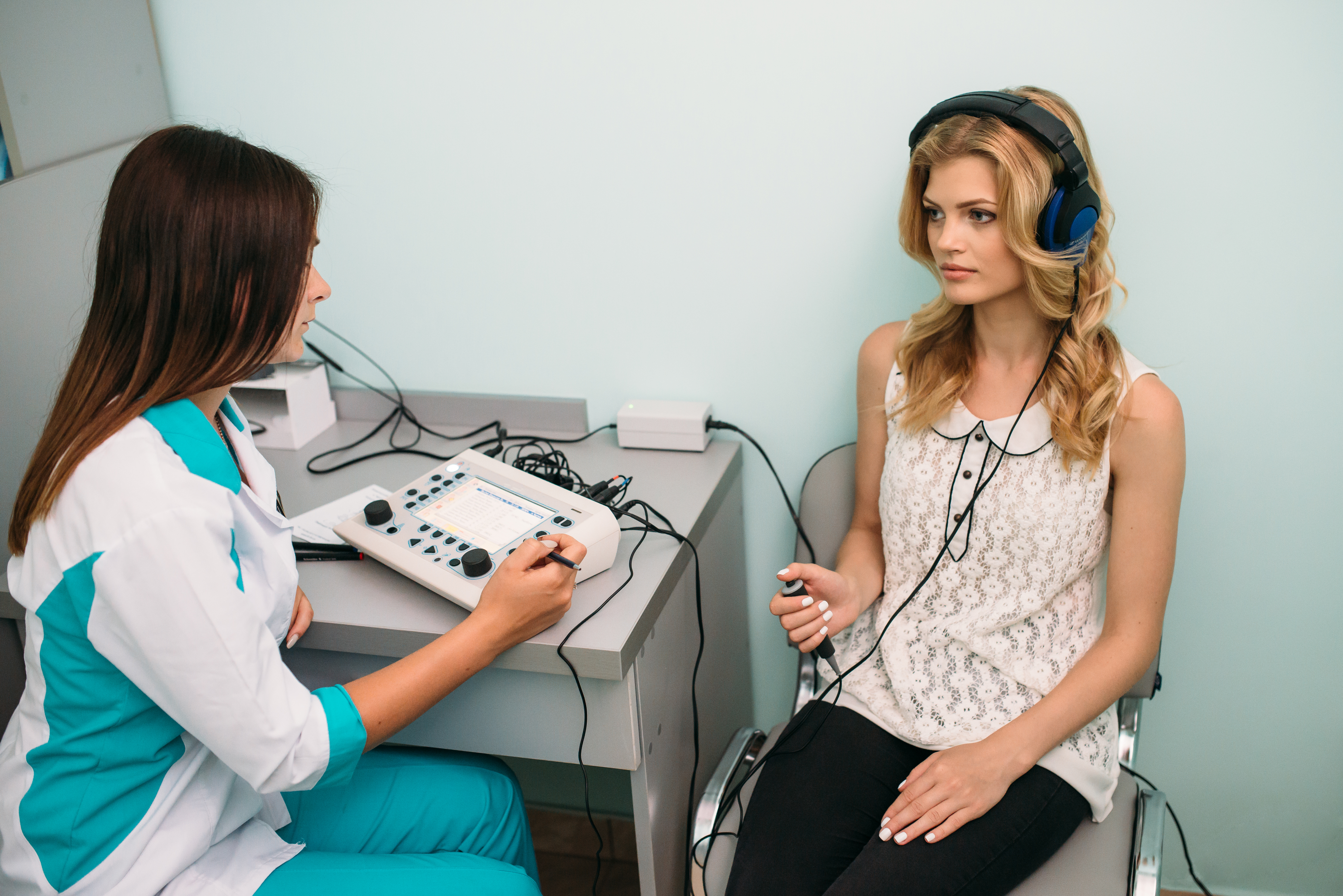
- Pure Tone Audiometry (PTA): Conducted inside a calibrated soundproof booth, PTA establishes your hearing thresholds across the full clinical frequency range (250 Hz to 8,000 Hz) and generates your audiogram — the primary prescription blueprint loaded into Oticon Genie 2 for initial fitting target generation. For Oticon's Deep Neural Network (DNN) platform devices, the precision of this audiogram is especially critical, as the DNN's personalised sound classification is anchored to your specific audiometric profile.
- Speech Audiometry: Measures your functional speech recognition — your ability to accurately detect and repeat words and sentences at different volumes and competing noise levels. For Oticon's OpenSound platform specifically, speech audiometry data informs the calibration of OpenSound Navigator's speech enhancement layer and helps set realistic expectations for speech-in-noise performance across your real daily environments.
- Tympanometry: Evaluates middle ear health — eardrum mobility, ossicular chain integrity, and middle ear pressure. Essential for clinically distinguishing sensorineural hearing loss (inner ear / auditory nerve — the domain of hearing aids) from conductive hearing loss (outer / middle ear — typically requiring medical or surgical management before hearing aids are considered).
- Uncomfortable Loudness Level (UCL) Testing: Determines the upper boundary of your comfortable hearing range — the volume level at which sound becomes physically uncomfortable. This data is loaded into Genie 2's maximum output parameters, preventing the over-amplification that causes discomfort and undermines the early adaptation process that BrainHearing relies upon.
Only after this complete assessment sequence is documented and analysed should your audiologist proceed to Oticon model and technology tier selection. Any recommendation that precedes this data collection is not a clinical prescription — it is a commercial preference.
Step 2: Selecting the Right Oticon Model — Expert Guidance vs. Common Mistakes
Oticon's portfolio is built around a coherent neuroscientific framework — BrainHearing — but is expressed across meaningfully different technology tiers. Selecting the right model within this framework is where the expertise of the audiologist at your chosen Oticon hearing aids clinic in Indiranagar becomes most consequential.
| Common Mistake by Inexperienced Providers | What Expert Oticon Guidance Looks Like |
|---|---|
| Treating all Oticon RIC models as equivalent, differentiating only by price | Explaining the meaningful processing architecture differences between Real, More, and Intent platforms, and matching the tier to the patient's cognitive and acoustic needs |
| Not assessing listening fatigue as a clinical selection criterion | Systematically measuring listening fatigue severity and using it as a primary differentiator toward Oticon Intent's 4D Sensor and full OpenSound Navigator |
| Failing to explain why OpenSound Navigator differs from conventional directional processing | Providing a clear, accessible explanation of how open-scene processing reduces cognitive load vs. traditional beamforming — giving the patient a clinical reason, not just a product claim |
| Recommending Intent Premium to every patient regardless of clinical need | Matching Intent Standard vs. Premium recommendation to the patient's acoustic environment complexity and documented listening fatigue severity |
| Not discussing Oticon Own as an ITE option for patients with cosmetic concerns | Proactively introducing the Oticon Own range — including IIC invisible options — for patients who have expressed discomfort with visible hearing aids |
| Skipping Real Ear Measurement | Conducting REM as the non-negotiable verification step in every Oticon fitting session without exception |
| Providing no trial period | Structuring a minimum 15–30 day real-world trial as standard clinical practice — especially important for patients transitioning from conventional directional aids to Oticon's open-sound approach |
| Not setting up the Oticon Companion app and remote care during the fitting | Completing Companion app setup, RemoteCare activation, and personalisation feature orientation before the patient leaves the clinic |
Oticon's Key Models and Their Ideal User Profiles:
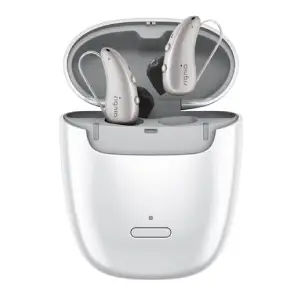
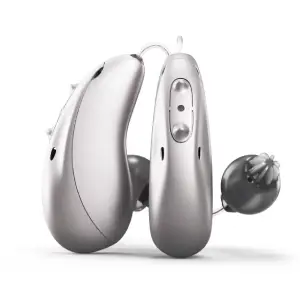
- Oticon Intent: Oticon's newest and most advanced platform (2024), powered by the Polaris R processing chip and featuring the world's first 4D Sensor in a hearing aid — motion sensors that detect the wearer's head and body movement and use this data to dynamically adjust the directional processing strategy in real time. When you turn your head toward a speaker, Intent detects this motion and provides the corresponding directional support. When you are walking and listening simultaneously, Intent adjusts its processing to account for the additional cognitive load. Best for: cognitively active adults managing complex, varied acoustic environments; patients with documented listening fatigue with existing hearing aids; and anyone for whom the intersection of physical activity and listening demand is a daily reality.
- Oticon Real: The previous flagship platform, still offering Oticon's full OpenSound Navigator and MoreSound Intelligence 2.0 processing in a refined, clinically proven form. Features dedicated wind and handling noise management specifically designed for outdoor listening environments — directly relevant to Bangalore's outdoor social environments and commuting conditions. Best for: patients who want Oticon's full BrainHearing processing architecture at a more accessible price point than Intent, without sacrificing clinical outcomes quality.
- Oticon More: The DNN-based platform that made history as the first hearing aid trained on 12 million real-life sound scenes using a Deep Neural Network. Delivers exceptional sound scene clarity and a natural listening experience that remains competitive despite being the previous-generation flagship. Best for: patients seeking proven, research-backed Oticon quality at a meaningful saving over the current flagship tiers.
- Oticon Own: Oticon's fully custom in-the-ear (ITE) range, available from standard ITE down to Invisible-in-Canal (IIC). Custom-moulded to the geometry of each patient's ear canal. The in-canal microphone placement provides natural acoustic advantages — including pinna (outer ear) sound direction cues — alongside maximum discretion. Available with BrainHearing processing across premium tiers. Best for: patients prioritising cosmetic discretion, glasses wearers (for whom BTE/RIC devices can create physical conflicts), and patients seeking the acoustic benefits of a microphone positioned at the natural ear canal entrance.
- Oticon Xceed: Purpose-built for severe to profound hearing loss — the most powerful hearing aid in Oticon's portfolio. Delivers the highest gain output in the Oticon range while retaining OpenSound Navigator's full BrainHearing processing framework. Best for: patients whose audiogram indicates severe to profound hearing loss across multiple frequencies, particularly those for whom other premium RIC devices have previously delivered insufficient amplification.
- Oticon Play PX: Oticon's dedicated paediatric platform, engineered for the specific audiological and developmental needs of children and young adults. Features child-optimised fitting targets (DSL v5.0), compatibility with the Oticon EduMic remote microphone for classroom environments, and robust physical construction for active, school-age use. Paediatric fitting requires an audiologist with specific paediatric audiology qualification and experience.
- Oticon CROS / BiCROS: For individuals with single-sided deafness (SSD) or unaidable hearing in one ear. Wirelessly routes acoustic information from the non-hearing side to the hearing aid on the functioning ear, restoring spatial sound awareness and reducing the listening effort burden of unilateral hearing.
Step 3: The Oticon Fitting, BrainHearing Personalisation, and Long-Term Aftercare
A correctly prescribed and fitted Oticon device — particularly at the Intent or Real tier — delivers clinically measurable improvements in both speech understanding and listening fatigue. An incorrectly fitted one delivers neither. The clinical fitting and aftercare process at your chosen Oticon hearing aids centre in Indiranagar is where that difference is made.
The Professional Oticon Fitting Session — What It Must Include:
1. Genie 2 Software Programming:
Your audiologist imports your audiogram into Oticon Genie 2 and generates initial prescription targets — using NAL-NL2, DSL v5.0, or Oticon's proprietary BrainHearing fitting rationale. Initial gain settings are set conservatively to allow your auditory cortex to begin acclimatising to the full sound scene that BrainHearing provides — which, for patients transitioning from conventional directional aids, can initially feel broader and less focused than expected. This is neurologically normal and resolves within the adaptation period.
2. OpenSound Navigator Configuration:
The audiologist configures the OpenSound Navigator processing parameters — the speech enhancement sensitivity, the environmental sound balance, and the transition speed between acoustic environments — based on your specific case history, audiogram, and listening fatigue profile. This is not a generic setting but a personalised configuration. Patients with severe listening fatigue require different OpenSound Navigator calibration than patients fitting Oticon for the first time without a fatigue history.
3. Real Ear Measurement (REM) Verification:
A probe microphone placed alongside the hearing aid in your ear canal measures the actual sound pressure level being delivered at your eardrum in real time. This is the only objective method for confirming that the device's output matches the prescribed BrainHearing targets for your specific ear canal geometry. Software calculations alone cannot account for the individual acoustic variance between ear canals — REM corrects this with measured physical data. It is the gold standard for hearing aid fitting verification internationally and must be a non-negotiable step at any clinic providing genuine clinical care.
4. Oticon Companion App Setup and RemoteCare Onboarding:
The Oticon Companion app (iOS and Android) provides real-time volume and programme control, a tinnitus sound library, hearing diary functionality, and — for RemoteCare-enrolled patients — access to remote fine-tuning support from your audiologist without requiring a clinic visit. Your audiologist should set up and demonstrate the Companion app, register your devices for RemoteCare, and orient you to the programme structure before you leave the fitting session. A patient who leaves without the Companion app configured has not received a complete Oticon fitting.
The Structured Follow-Up Schedule (Weeks 1–12):
| Follow-Up Stage | Timing | Key Clinical Actions |
|---|---|---|
| First follow-up | Week 1–2 | Report sound quality impressions, acoustic comfort, own-voice naturalness, and listening fatigue comparison vs. previous devices. Adjust OpenSound Navigator sensitivity, environmental balance, and gain targets based on real-world feedback. |
| Second follow-up | Week 4–6 | Full programme review. Fine-tune speech enhancement settings, Bluetooth streaming volume, tinnitus masking parameters where applicable, and 4D Sensor motion response (Intent users). |
| Third follow-up | Week 10–12 | Long-term outcome baseline. Assess listening fatigue improvement. Evaluate daily wear-time data. Confirm OpenSound performance across all primary listening environments. Residual complaint resolution. |
| Annual maintenance | 12 months | Device deep-clean, receiver and dome replacement, audiometric re-evaluation, Genie 2 firmware update. |
Oticon RemoteCare — Teleaudiology for Bangalore Patients:
Through Oticon RemoteCare, your audiologist can review your hearing aid usage data and deliver fine-tuning adjustments to your devices remotely — without requiring an in-person clinic visit. For Indiranagar and Bangalore patients managing busy professional schedules or logistical constraints, RemoteCare is a meaningful clinical convenience that keeps the aftercare process responsive and continuous without the friction of repeat clinic appointments.
Why Expertise Matters: The Case for Hearing Wellness Clinic
Navigating the landscape of Oticon hearing aids in Indiranagar — its neuroscientific depth, its clinical fitting requirements, and its provider quality spectrum — demands a partner who brings genuine, demonstrable expertise to every stage of the engagement. Hearing Wellness Clinic is that partner.
The EchoPx Advantage: 17+ Years of Global Experience
Oticon has been conducting hearing research for over 120 years. Their commitment to depth over shortcuts — to understanding the brain before designing the device — is the same philosophy that guides Hearing Wellness Clinic' approach to every client engagement across 17+ years of global delivery.
Experience of this depth does not produce complacency — it produces precision. It means every challenge you bring has been encountered, analysed, and resolved before. It means the systems, processes, and quality standards behind your engagement are the product of nearly two decades of refinement, not theoretical frameworks being applied for the first time.
Comprehensive Solutions: Web Development, Design, and CRM Systems
Hearing Wellness Clinic does not operate in a single lane. Comprehensive, end-to-end delivery across web development, UI/UX design, and CRM systems means every layer of your digital and operational infrastructure — from patient-facing platforms to back-office systems — can be built, integrated, and scaled under the accountability of a single expert partner.
For healthcare and audiology organisations across Bangalore, this means patient management platforms, appointment scheduling systems, audiological record management, and customer relationship workflows that are coherently architected, professionally developed, and supported as an integrated technology ecosystem rather than a collection of disconnected tools.
Unwavering Support: Our 24/7 Custom Support Commitment
Oticon's RemoteCare platform is built on a core conviction: that a patient's hearing needs do not end at the clinic door. Hearing Wellness Clinic operates on exactly the same principle. 24/7 custom support means genuinely available, expert human assistance — at any hour, on any day — from professionals who know your specific context, your systems, and your goals. Not a chatbot, not a ticket queue with a two-day SLA. Responsive, informed, accountable support whenever you need it.
Trust by the Numbers: Serving 2,000+ Clients Worldwide
Oticon's 120-year track record is, at its core, the accumulated trust of millions of patients who heard better, lived more fully, and came back. Hearing Wellness Clinic' record of 2,000+ clients served worldwide reflects the same principle at a different scale — organisations across industries and geographies who trusted, returned, and referred because the quality of delivery consistently justified it. For clients across Bangalore and India, it is the assurance that your engagement is backed by a globally proven standard of performance.
Frequently Asked Questions (FAQs) — Oticon Hearing Aids in Indiranagar
Conclusion: Making the Right Decision on Oticon Hearing Aids in Indiranagar
Choosing the right Oticon hearing aids in Indiranagar means choosing a brand that approaches hearing not as an amplification problem to solve, but as a neurological experience to support.
This guide has given you the complete framework to make that choice with confidence: how to verify your provider's clinical credentials and Oticon authorisation; how to identify the five red flags that separate genuine audiological expertise from retail opportunism; how to decode Oticon's pricing across eight product tiers; what a gold-standard fitting process looks like — from BrainHearing-informed case history through to REM verification and Companion app onboarding; and which Oticon platform is engineered for which intersection of hearing loss severity, lifestyle complexity, and cognitive demand.
The difference between a hearing aid that gives you clear sound and one that gives you effortless, fatigue-free hearing is the difference between a device that amplifies and one that supports how your brain is designed to hear.
That difference is Oticon. And finding the right clinical partner to unlock it is everything.
At Hearing Wellness Clinic, we bring 17+ years of global expertise, a track record of 2,000+ clients served worldwide, and 24/7 custom support to every engagement — ensuring that every solution we deliver meets the highest standard of quality, precision, and long-term accountability.
>
>
>